Tie-Down Hook and Ring Selection
A buyer's guide to telling complete tie-down assemblies apart from loose end fittings, and to defining the connection interface before you ask for a matching reference.
Sources: DW Hooks & Ratchet Catalog, pages 3-7, and product catalog, pages 16-17 (family photographs only), plus the US Cargo Control article on hook geometry (qualitative profile comparison only).
Direct answer: start from the actual anchor geometry and intended load direction, then match the fitting, webbing slot and finished assembly evidence. A similar-looking hook is not proof of fit or load capacity. The first step with any U.S. request is to separate a complete tie-down assembly from a loose end fitting, because the two need different information.
Identify the interface
A complete tie-down assembly joins webbing, a buckle or tensioner and end fittings into a finished product. A loose end fitting is a single component that still needs webbing, stitching and assembly around it. The D-rings discussed here are webbing connection parts, not vehicle weld-on anchors or lifting master links, and cargo restraint and overhead lifting are separate applications.
For a limited outside explanation of fitting geometry, the US Cargo Control article “Which Tiedown Hook Is Right for Me?” describes hooks mainly by how their profile meets the anchor. Flat hooks need a supporting surface and an opening that matches it. Wire or double-J hooks have a narrower shaped profile. S hooks are open connections. Snap hooks add a gate whose closure and clearance must be checked. We use that only as a description of shape. This DEWIN guide carries over no dimensions, loads or safety claims from the source, and we do not rank hook families by strength.
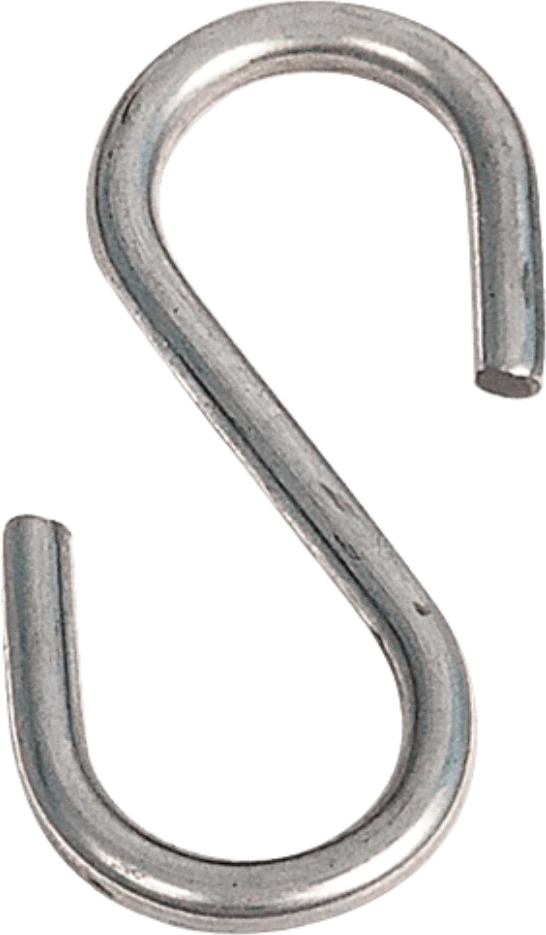
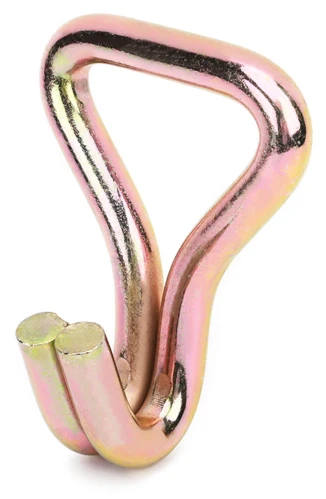
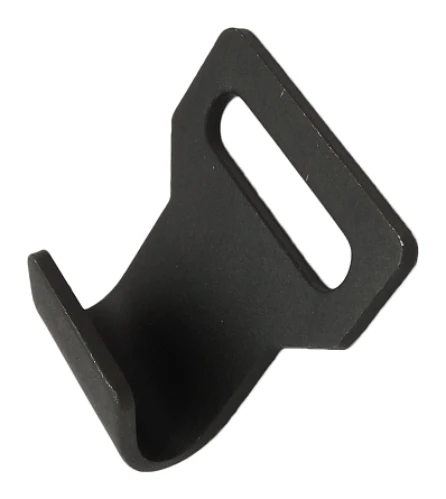
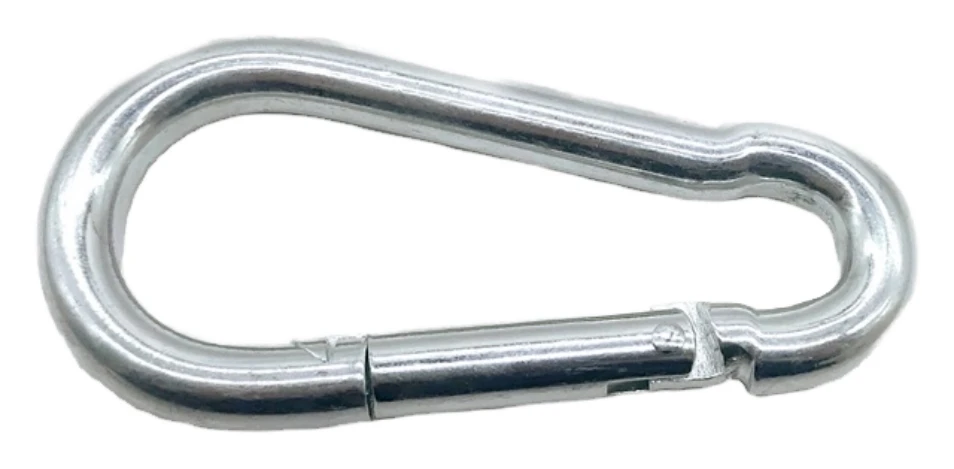
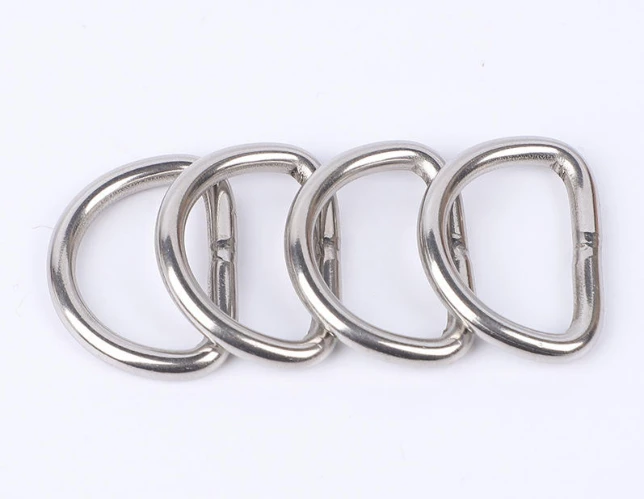
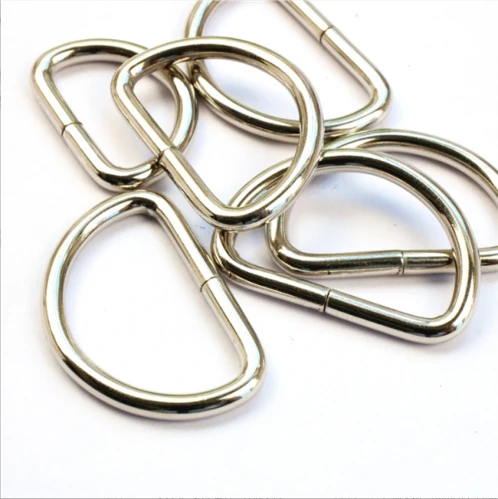
| Family | Geometry or question | What to measure | Buyer request |
|---|---|---|---|
| S hook | An open connection. Does the anchor stay seated in the open side while the strap is slack and while it is loaded? | Throat opening (in), wire diameter (in), orientation to the strap | Request the matched drawing and applicable component test scope, showing the open side against your anchor. |
| Wire / double-J hook | A narrower shaped profile. Does it fit the anchor opening and sit in the intended direction? | Hook opening (in), wire diameter (in), nominal webbing width (in) | Request the matched drawing and applicable component test scope, with the material stated in the document. |
| Flat hook | Needs a supporting surface and an opening that match its profile. What does it rest on? | Opening (in), plate thickness (in), supporting surface depth (in) | Request the matched drawing and applicable component test scope, showing the supporting surface. |
| Snap hook | Includes a gate. Does the gate close fully, with clearance around the anchor? | Throat opening (in), gate clearance (in), wire diameter (in) | Request the matched drawing and applicable component test scope, including the gate and its closure. |
| Webbing D-ring | A webbing connection part, not a vehicle weld-on anchor or lifting master link. Does the webbing pass through it squarely? | Internal slot width (in), nominal webbing width (in), ring material thickness (in) | Request the matched drawing and applicable component test scope, with the ring material stated in the document. |
| Soft loop | A textile connection. Its stitching and assembly need confirmation, and the loop must pass over the connection point. | Loop length (in), nominal webbing width (in), the connection point it must pass over | Request the matched drawing and the stitching and assembly details for the finished loop. |
Read the table as a list of questions and a list of documents to request, not as a catalog or a record of our stock or test results. If your connection point sits at the end of a finished tension assembly, compare it with our Ratchet Straps page, then bring the drawing or photo of the actual anchor to our factory team so the fitting question is settled before a configuration is discussed.
- Photograph the anchor point from the front and from the side, and mark the direction the strap will pull.
- Note whether the connection is an open bar, a closed ring, a rail slot or a flat edge.
- Decide whether you need a complete assembly or loose end fittings only.
- Write down the family you think applies, and mark it as a guess if you are unsure.
- Keep the current fitting's part number or drawing, if you have one.
Request dimensions and configuration
Give every buyer dimension in inches (in) and leave any field you cannot fill blank. We do not assign default dimensions taken from competing products, and we will not quote a size from a hook that merely looks similar. A blank field is more useful to us than a guessed one, because it tells us exactly what to ask next.
If you are unsure what to measure, send an existing drawing or a clear photo of the actual connection point instead. Please do not bend, cut or alter a hook to make it fit the anchor. Photograph it as it is, and our factory team will work from that.
- Nominal webbing width (in): the width family of the strap the fitting will join.
- Internal slot width (in): the opening the webbing passes through on the fitting.
- Hook throat or opening (in): the gap that has to sit over the anchor.
- Wire diameter or plate thickness (in): measured on the existing part, if one is available.
- Gate clearance (in): for snap hooks, how the gate closes against the anchor.
- Orientation and loaded direction, with a drawing or photo of the actual connection point.
Catalog photographs cannot establish fit. We do not publish factory-approved interface drawings in this guide, so quotation review starts from your anchor photo or a dimensioned drawing of the connection point.
Approve a matched assembly
Before you approve a sample, match the model, drawing, revision and photo to one another. A photograph that looks right is not a match on its own. The identifier on the drawing, the revision and the sample in your hands should all point to the same assembly.
Component strength does not establish the working load limit of a finished tie-down. Record WLL in pounds (lb) only where it is documented for the complete assembly, and leave any measurement or rating you do not have as a blank field. Supplier figures, customer requirements and tested values belong in separate fields.
Dewin Technology Company Limited runs DEWIN as a factory in Vietnam, and U.S. buyers may submit an incomplete brief and photos for review. If logo placement, colors or packing also matter, start with Custom & Private Label, then send the details with your inquiry.
- Model, drawing and revision identifier of the assembly, left blank where none has been issued.
- A sample photo matched to that identifier.
- Actual material and finish of each fitting, taken from documents rather than appearance.
- Component test scope, stating what was tested and how.
- Finished assembly WLL (lb), where documented for the complete configuration.
- Tag and traceability marking on the finished assembly.
Grade and strength cannot be read from a photograph. Ask for the material and load documents that cover your named finished configuration and intended U.S. use.
Related Posts
Polyester vs Nylon Webbing
A webbing materials guide to help you describe the fiber you need before you request a quote.
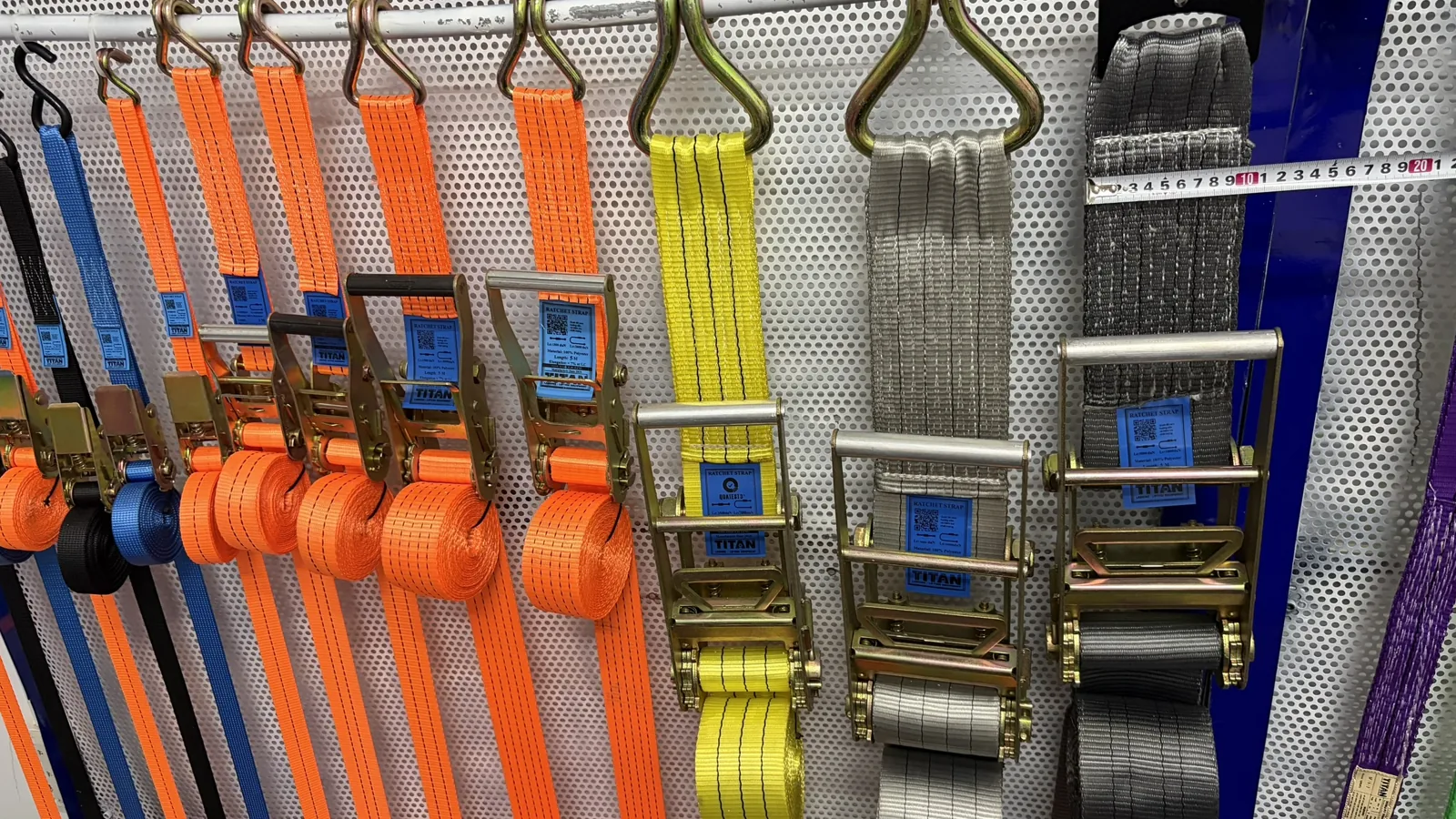
Tie-Down Strap Specification Form
A U.S. requirements worksheet for width, length, end fitting and quantity, so you can send a clear brief.